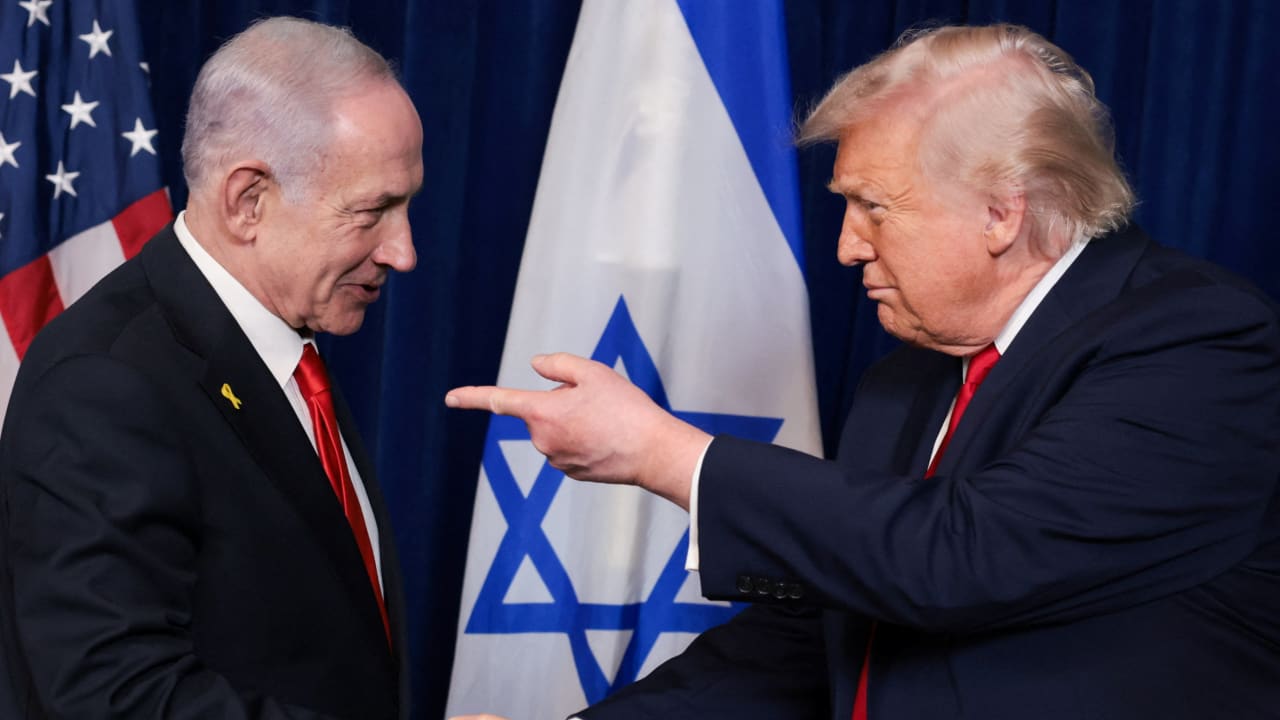
A Surprising Revelation
In a recent interview, US President Donald Trump made a bold claim: Prime Minister Benjamin Netanyahu agreed to end nearly $4 billion in annual American assistance to Israel by the end of 2026. This revelation, made on the morning of the American midterm elections, sent shockwaves through political and diplomatic circles.
The Political Angle
Trump argued that ending US aid to Israel would deprive Democrats of a powerful talking point, particularly in Michigan, where support for Israel has become a pivotal issue in a closely contested Senate race. He suggested that by removing this argument, Republicans could gain an advantage.
"The left uses the $4 billion payment... as a signal of unfairness, and we can't allow that to happen," Trump said, embracing the idea of removing this "best talking point" for his opponents.
Netanyahu's Role
According to Trump, it was Netanyahu who proposed ending the aid. He quoted Netanyahu as saying, "I think it would be appropriate if we do not receive aid."
However, this claim has been met with skepticism. Some commentators suggest that Netanyahu's alleged agreement may be a strategic move to punish the incoming coalition government or benefit Trump politically.
Impact on US-Israel Relations
The announcement raises questions about the future of US-Israel relations and military assistance. The current framework, a 10-year memorandum signed in 2016, provides $38 billion in military aid over the decade. Trump's claim suggests a significant shift, but the details and implementation remain unclear.
"Their polling must be truly awful," one commenter remarked, hinting at the potential political motivations behind the announcement.
A Complex Situation
While Trump asserts that Israel can still purchase American weapons, the distinction between aid and defense cooperation is crucial. It remains to be seen how this alleged agreement will affect existing contracts and the overall relationship between the two nations.
"Honestly, him lying is the best option. If they actually reached an agreement, there's a very big catch somewhere," another comment suggested, reflecting the uncertainty surrounding the situation.
Uncertainty and Skepticism
Many are skeptical of Trump's claims, given his history of making controversial statements and the timing of the announcement on Election Day. Some suggest it's a tactic to sway low-information voters, while others believe it's a lie to benefit Trump's political agenda.
"Trump is lying to try and sway the election. Let's see a signed budget from Congress and actual military spending," one commenter demanded.
The lack of clarity and the absence of official confirmation from the Israeli government add to the uncertainty surrounding this alleged agreement.
Conclusion
Trump's announcement has sparked a debate, with questions lingering about its authenticity, impact, and potential consequences. As the midterm elections unfold, the future of US-Israel relations and the fate of this alleged agreement remain to be determined.

